Boris Titov: 62% of Sustainable Development Goals on track in SCO, global average 18%
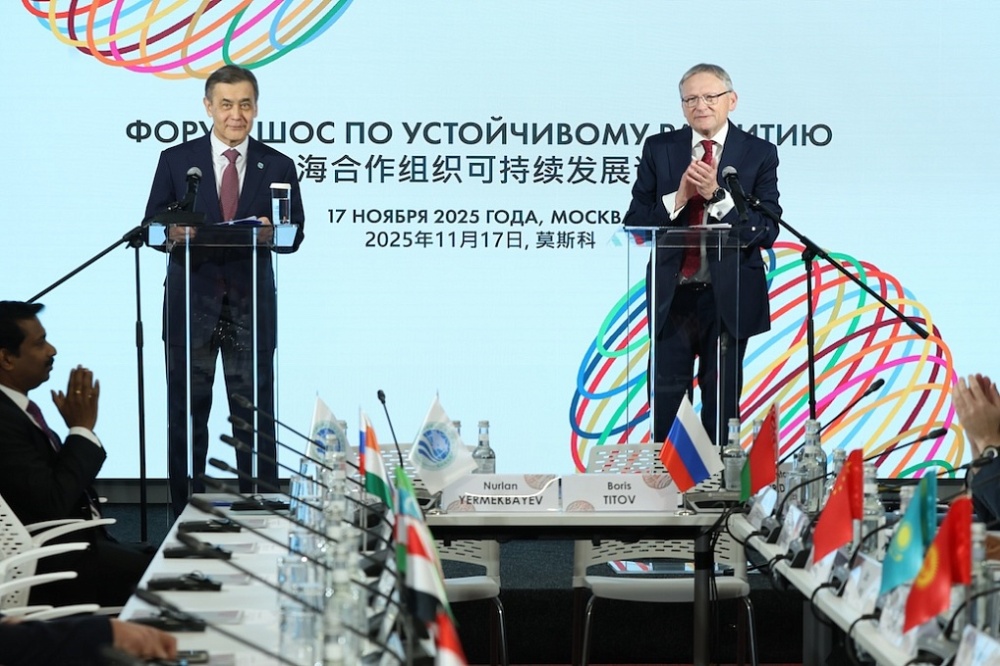
Special Representative of the President of the Russian Federation for Relations with International Organizations to Achieve Sustainable Development Goals Boris Titov spoke of the SCO’s sustainable development achievements during the opening of the SCO Sustainable Development Forum, now underway in Moscow. The event has been organized by the Special Representative of the President of the Russian Federation for Relations with International Organizations to Achieve Sustainable Development Goals Boris Titov and the SCO Secretariat with the support of the Ministry of Economic Development of the Russian Federation. It is being managed by the Roscongress Foundation.
“With the support of the SCO Secretariat and the Ministry of Economic Development of the Russian Federation, we have managed to bring together the representatives of 15 countries and numerous international organizations,” Titov said. “When the world came together to adopt the UN 2030 Agenda unanimously ten years ago, we had great hope for the new heights global development would achieve. Serious challenges, however, now place the Sustainable Development Goals at risk, primarily resulting from an unprecedented shortfall in funding on the part of Western countries, a lack of practical tools, the politicization of the sustainability agenda, and sanctions hindering global trade, among others.
“The SCO’s declaration of 2025 as the Year of Sustainable Development takes on particular symbolic significance against this backdrop of global fragmentation. Others could learn much from the SCO member states in this respect. Progress is on track for 62% of SDG targets within the SCO, a mark that stands at only 18% globally, with another 17% deemed to have achieved moderate progress.
“As one of the SCO’s most important members, Russia must take a leading role in the global sustainable development agenda,” Titov reiterated. “With 42% of the world’s inhabitants and 32% of global GDP, the SCO possesses great potential. The large enterprises increasingly adopting ESG standards together with the small, whose daily work produces essential goods and services, are contributing to the pace of sustainable development in significant ways.”
Titov went on to say that the SCO was in a position to make the important contribution of a new global development architecture by showing the meaning of true multilateral cooperation. Russia has called for the creation of an SCO Sustainable Development Council within the SCO Consortium of Think Tanks, with practical work already underway as it looks at current and future initiatives and invites all interested member states and partners to join in the work.
SCO Secretary-General Nurlan Yermekbayev spoke of the Tianjin Declaration of 2025, as part of which the heads of member states reaffirmed their commitment to working together to achieve the UN Sustainable Development Goals.
“Still, if we are to achieve the sustainable development targets, we must overcome a number of challenges,” he said. “The interests and actions of many countries to achieve the SDGs have diverged in significant ways, there is a lack of funding, rules vary, and protectionist barriers have reared their heads in the carbon market. Unilateral sanctions, rivalries between different blocs, and growing security threats are all having a negative impact.
“As a result, there is an urgent need to more effectively utilize the SCO’s combined potential and the experience and knowledge of its member states, which have achieved significant progress in achieving sustainable development targets,” Yermekbayev said in conclusion.